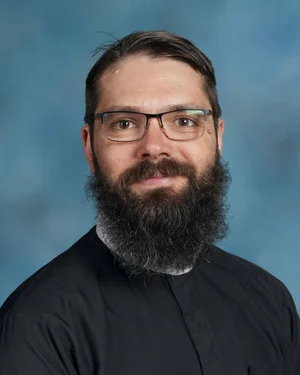
"The same Lord who calls us last also places Himself beneath us." Wednesday of Septuagesima 2026
04. February 2026
Wednesday of Septuagesima
Mark 9:30-37
This is the Word of the Lord that came to me, so that you may believe that Jesus is the Christ, the Son of God, and that by believing, you may have life in His + Name. AMEN.
Jesus is walking through Galilee, but He does not want anyone to know. This is not the season for crowds, applause, or amazement. This is instruction time. This is catechesis. And the subject of His teaching is not how to have influence or leadership or success, but death.
“The Son of Man is going to be delivered into the hands of men, and they will kill Him. And when He is killed, after three days He will rise.” (Mark 9:31) This is the second time Jesus has said this to them. He is not vague. He is not symbolic. He does not soften the words. Delivered. Killed. Raised. Clear, direct, unavoidable. And yet Mark tells us something disturbing: “They did not understand the saying, and were afraid to ask Him.” (Mark 9:32)
They do not understand—not because the words are unclear, but because the meaning is unbearable. This is not the Messiah they want. This is not the kingdom they imagined. And so fear silences them. Not reverence. Fear.
That fear shows itself almost immediately. While Jesus speaks of being handed over, they speak among themselves of being lifted up. While He prepares them for His humiliation, they argue about their own elevation. “They had argued with one another about who was the greatest.” (Mark 9:34)
This is not a side conversation. This is not merely childish nonsense. This is theology gone wrong. This is what happens when the Word of Christ is heard but not received—when it is resisted, deflected, and replaced with something more palatable.
And lest we think ourselves wiser than the Twelve, Christ stands here to accuse us too. The Church does not struggle with ignorance nearly as much as it struggles with ambition baptized in religious language. We know the words of Jesus. We sing them. We confess them. And then we quietly measure ourselves against one another anyway.
Who is more faithful. Who is more orthodox. Who is more serious. Who is more effective. Who matters more. This is the old leaven at work. So Jesus does not ignore it. He does not excuse it. He does not redirect gently. He confronts it. He sits down. That matters. A rabbi sits to teach authoritatively.
“If anyone would be first, he must be last of all and servant of all.” (Mark 9:35) This is not advice. This is not a suggestion for better community life. This is a declaration that demolishes every hierarchy built on self-assertion. Jesus does not merely reverse the order; He exposes the lie beneath it. The world says: climb. Achieve. Prove. Secure your place. Jesus says: die. And to make sure no one spiritualizes this away, He places a child in their midst.
“He took a child and put him in the midst of them.” (Mark 9:36) In the ancient world, a child had no status, no power, no claim. Often slaves were ranked higher. A child owned nothing and contributed nothing. A child was dependent, vulnerable, unimpressive. That is the point.
“Whoever receives one such child in My name receives Me.” (Mark 9:37) Jesus identifies Himself not with the strong, the competent, or the impressive—but with the lowly and the dependent. And more than that: “Whoever receives Me receives not Me but Him who sent Me.” (Mark 9:37)
The greatness of God hides itself here—under weakness, humility, and need. This is not a strategy for influence. This is a theology of the cross. Christ prepares us for this truth by stripping away our illusions. It reminds us that the kingdom of God is not built by human excellence or sustained by spiritual achievement. It is given. Freely. To the unworthy.
And this is precisely what the disciples cannot yet grasp—because they have not yet seen the cross. But we are moving there. Jesus does not merely teach servanthood. He becomes the servant. He who is first becomes last. He who is greatest becomes least. He who knew no sin is made sin for us.
“The Son of Man is going to be delivered.” (Mark 9:31) That delivery is not accidental. It is the will of the Father. It is the work of salvation. Christ is handed over so that sinners might be handed forgiveness. He is condemned so that the guilty might be justified. He is lowered into death so that the dead might be raised.
This is not an example first. It is a gift first. Only then does it become a calling. The Church is not told to imitate Christ in order to earn salvation, but because salvation has already been given. Only the forgiven can serve without needing recognition. Only the justified can afford to be last. Only those who have been received by God can receive others without fear.
That is why Jesus places the child in their midst. Not to sentimentalize innocence, but to locate faith. Faith receives. Faith depends. Faith does not claim status.
And this is where Jesus presses us hard. It asks whether we want Him—or whether we want greatness with religious language attached. It exposes how often we want Christianity to succeed on our terms, with our metrics, our victories, our hierarchies.
But the Church does not grow by winning arguments or accumulating prestige. She lives by dying. She reigns by serving. She stands only because Christ was brought low. And so the Word today does what it must do. It wounds. It unsettles. It silences our boasting. But it does not leave us there.
Because the same Jesus who exposes the disciples’ sin also announces His resurrection. The same Lord who calls us last also places Himself beneath us. The same Christ who demands everything also gives everything.
“After three days He will rise.” (Mark 9:31) That is the hope that carries us forward. Not our faithfulness. Not our rank. Not our service. But His death and His life for us. So let the Word do its work. Let it tear down our false greatness. Let it strip us of our defenses. Let it make us small.
Because there—precisely there—Christ meets us. Not as a rival, but as a Savior. Not as a judge, but as the One who has already been judged in our place. And having been received by Him, we are freed to receive others—not to prove ourselves, but to serve in joy.
This is the Word of the Lord that came to me, so that you may believe that Jesus is the Christ, the Son of God, and that by believing, you may have life in His + Name. AMEN.
Rev. Christopher R. Gillespie
St. John Ev. Lutheran Church & School - Sherman Center
Random Lake, Wisconsin