The State Restrains Evil, the Church Proclaims Christ
We just had an election. Candidates always promise safety, prosperity, and justice—if only you vote the right way. Pastors often feel pressure to speak up, to take sides, to make the pulpit relevant to what matters. Christians wonder: If we care about justice, shouldn't the Church lead the charge? If we want change, shouldn't we “baptize” our politics and call it our mission?
The problem is two-fold. We're asking the Church to do what God never authorized it to do. And we're expecting the State to deliver what it cannot provide. God distinguishes between two kingdoms—two forms of His rule—and assigns each a different task. In Luther's Small Catechism, the Table of Duties lays it out: "Let every person be subject to the governing authorities. For there is no authority except from God, and the authorities that exist have been instituted by God" (Romans 13:1). The civil authorities "do not bear the sword in vain" (Romans 13:4)—they exist to restrain evil, reward the good, and preserve external order. That's their God-given vocation. But the Church? She proclaims the forgiveness of sins, administers the sacraments, and calls sinners to repentance and faith. Conflate the two, and you get a State that claims to save souls or a Church that pretends to wield the sword. Both distort God's design.
This distinction isn't a retreat from public life. It's the framework that makes faithful public engagement possible. The State operates through coercion: it collects taxes, enforces contracts, punishes criminals, and wages war when needed. The market operates through voluntary exchange: buyers and sellers meet needs through cooperation. The State protects the market's functioning by defending property rights and punishing fraud, but the moment it tries to micromanage transactions—setting prices, dictating terms, picking winners—it distorts the cooperation it's supposed to guard. The Church? She preaches Christ crucified. She administers baptism and the Lord's Supper. She declares what God says about sin and grace, life and death, heaven and hell. When the Church starts lobbying for policy instead of proclaiming the Gospel, she abandons her post. When Christians treat political platforms like creeds, they turn Caesar into a rival savior.
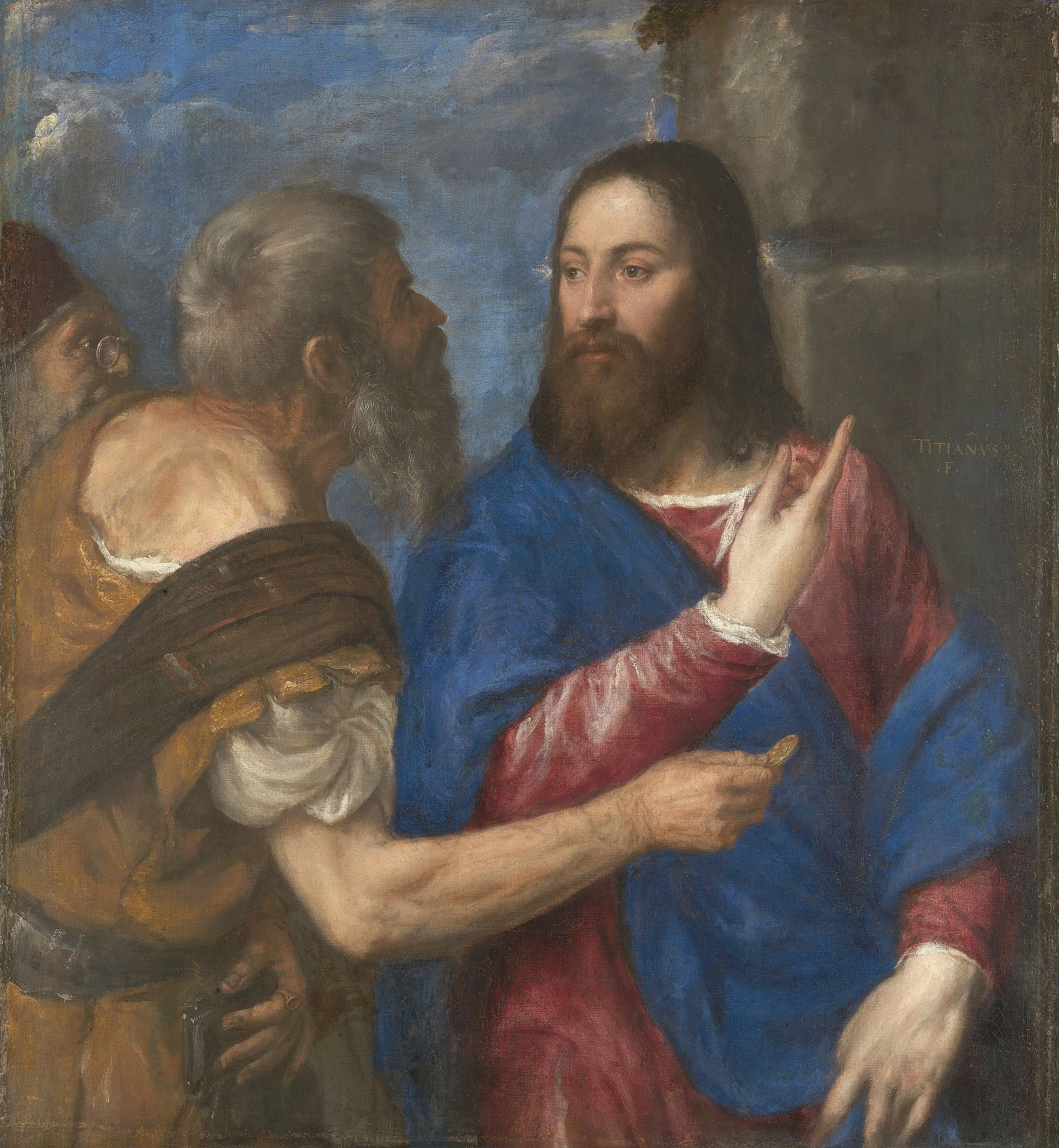
Where does that leave you? In both kingdoms, with responsibilities in each. You live under civil government: you pay your taxes, obey just laws, pray for your leaders, and participate in the civic process as a citizen. "Render to Caesar the things that are Caesar's" (Matthew 22:21). Caesar gets his denarius. God gets your soul. When Caesar oversteps and demands what belongs to God—your conscience, your worship, your allegiance to Christ—you answer like Peter: "We must obey God rather than men" (Acts 5:29). You also live in the Church, under the Gospel. Here, the State has no jurisdiction. It cannot bind consciences, dictate doctrine, or coerce belief. The practical upshot: you can argue tax policy, debate spending priorities, and advocate for justice in the public square—without making those debates tests of Christian faithfulness. You can disagree with fellow believers about economics and still commune together at the altar. The Gospel doesn't come with a party platform. Christ died for sinners, not for a legislative agenda.
This guards you from two opposite errors. The first is despair: the idea that because the world is broken, politics and economics are dirty, and faithful Christians should withdraw. God instituted government. He calls you to your vocation as citizen, worker, and neighbor. He commands justice, honesty, and care for the vulnerable in every sphere of life. The second error is idolatry: the idea that if we get the right people in office or the right policies in place, we can build the kingdom on earth. Every government is made up of sinners. Every economic system operates in a fallen world. No ballot box delivers salvation. No policy platform atones for sin. You work for justice—not because you think politics will save you, but because loving your neighbor is what Christians do. You advocate for honest weights and measures, fair wages, and the protection of the weak—not to earn God's favor, but because you have it in Christ. When your candidate loses, or your policy fails, you don't despair. The Church is still the Church. The Gospel is still true. Jesus is still Lord, whether Caesar knows it or not.
Two kingdoms. Real limits. The State keeps order. The Church proclaims Christ. You, baptized into His death and resurrection, live faithfully in both. Don't ask the Church to become a lobbying firm. Don't ask the State to become a parish. Don't mistake a political victory for the coming of the kingdom. The kingdom has come in the Word made flesh, crucified for sinners, risen from the dead, ascended to the right hand of the Father. That's where your citizenship is. That's where your hope is. Taxes, laws, policies, elections—all provisional. Important, but provisional. Render to Caesar what is Caesar's. Render to God what is God's. Then you can rest in this: Christ has won the only victory that matters and only His kingdom lasts forever.