The Vineyard and the Scoreboard in Your Head
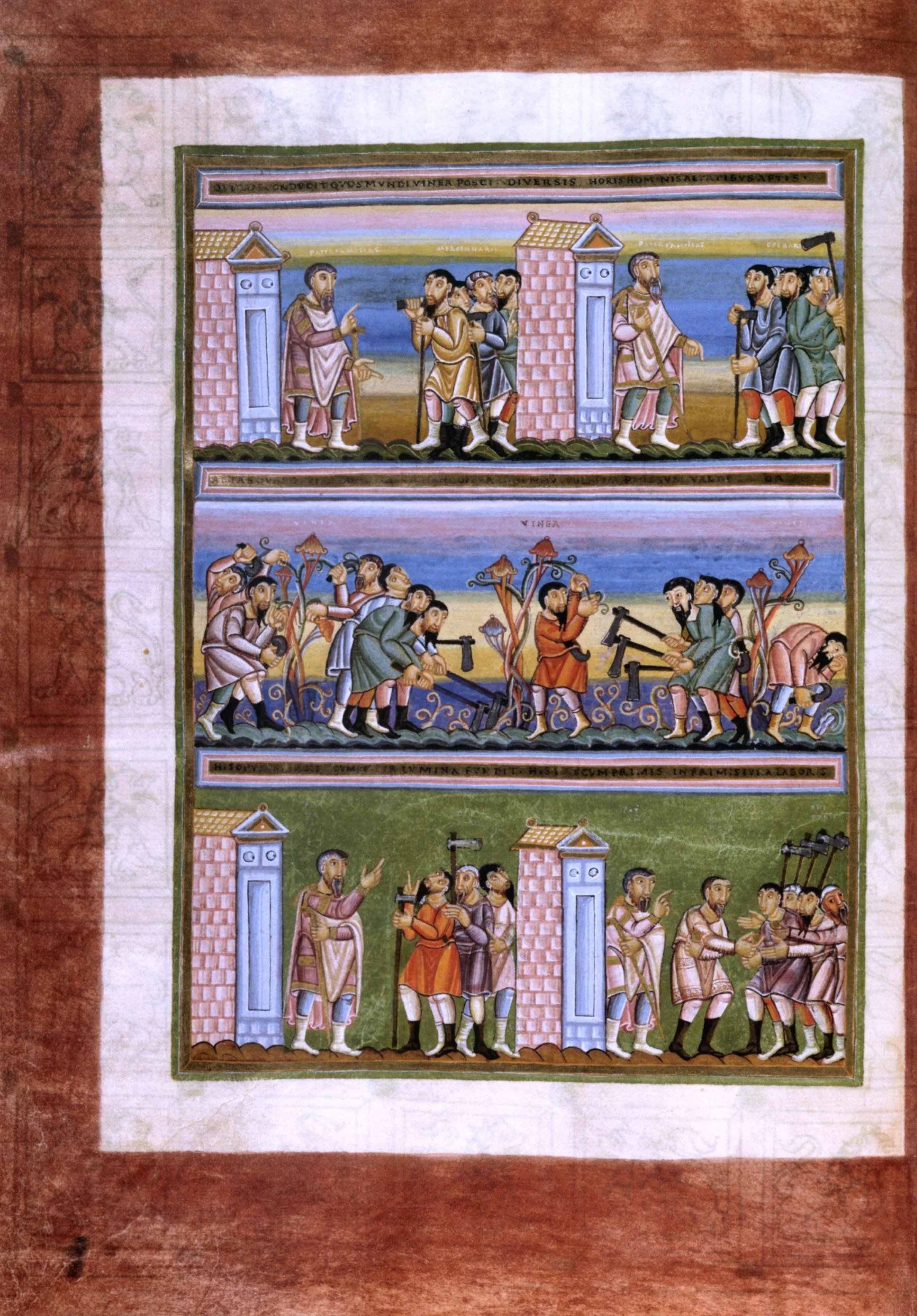
“Parable of the Workers in the Vineyard” (11th century), Codex Aureus Epternacensis, fol. 76f
Jesus says the kingdom of heaven is like a landowner who keeps going out to hire workers—early, midmorning, noon, late afternoon, even near the end of the day. When the day is done, he pays them all the same. That’s not Jesus giving a lesson on wage policy. It’s Jesus exposing what’s going on in our hearts when grace shows up and doesn’t “rank” people the way we do. The story isn’t mainly about labor; it’s about the Lord who is good and about us, who are so easily bent inward by envy and fear.
Most of us know the feeling: “I’ve been here longer. I’ve done more. I’ve carried more weight. Why do they get that?” It sounds reasonable—until we realize how quickly “reasonable” turns into resentment. Scripture names it plainly: “Love does not envy” (1 Corinthians 13:4). And yet envy comes naturally to us. We keep mental spreadsheets. We compare sacrifices. We replay perceived slights. We measure our lives against others’ outcomes and call it “justice,” when it’s often just self-justification with a nicer label.
But the landowner’s question cuts through it all: “Am I not allowed to do what I choose with what belongs to me? Or do you begrudge my generosity?” (Matthew 20:15). God’s gifts aren’t wages you earn; they’re mercy you receive. Eternal life isn’t a payout for the spiritually impressive; it’s the inheritance of sinners rescued by Christ. “By grace you have been saved through faith. And this is not your own doing; it is the gift of God” (Ephesians 2:8). If you want God to be strictly “fair” with you, you don’t actually want that. You want Christ.
That changes how we think about our money and work. In daily life, wages, budgets, and contracts matter—God is not anti-order. But Christians don’t have to live as anxious accountants of their own worth. Your job is not your righteousness. Your income is not God’s scoreboard. You are free to work hard without making work an idol; free to give without needing applause; free to rejoice when another is blessed. “Keep your life free from love of money, and be content with what you have” (Hebrews 13:5). Contentment isn’t passivity; it’s trust. It’s the quiet confidence that the Father knows what you need and that Christ’s mercy is not running out.
So here’s a good prayer for this week: Lord, kill the envy in me, the comparison, and the tight fist around what I think I deserve. Teach me to hear your generosity as good news, not as an insult. And then, having been paid in mercy I did not earn, make me gentle and glad to do good in my vocations—at home, at work, in my congregation, and toward the neighbor who can’t repay me. “Freely you have received; freely give” (Matthew 10:8).