"Faith is born from the breath of God" Quasimodo Geneti 2026
12. April 2026
Quasimodo Geneti
John 20:19–31
“Peace to you! As the Father has sent Me, I also send you.” 22 And when He had said this, He breathed on them, and said to them, “Receive the Holy Spirit. (Jn 20:21–22).
This is the Word of the Lord that came to me, so that you may believe that Jesus is the Christ, the Son of God, and that by believing, you may have life in His + Name. AMEN.
Locked doors. The disciples shut them. They feared the Jews. The same authorities who had killed their Lord three days before. These men had seen the tomb empty. They had heard Mary Magdalene, heard the other women. But they hid.
Fear shut them in. Death still had them. The tomb was empty. Their hearts were graves.
“Then, the same day at evening, being the first day of the week, when the doors were shut where the disciples were assembled, for fear of the Jews, Jesus came and stood in the midst, and said to them, ‘Peace be with you.’” (John 20:19)
The locked door did not stop Him. He came through. The risen Lord does not wait for us to unlock anything. He comes to us while we cower behind the barricade. The peace He speaks is not a simple greeting. It is absolution. Our sins are forgiven. Death has no claim on us. The grave is empty. And so is the charge against us.
“When He had said this, He showed them His hands and His side.” (John 20:20) The risen Christ still bears His wounds. He does not arrive as a ghost or an idea. He shows His flesh. Scarred. Pierced. The body that hung on the tree is the body standing before them. The blood that ran from His side has dried, but the wound remains open.
These marks authenticate Him. They prove He is not an impostor. But more than that, they preach. The wounds proclaim that the sacrifice is finished. The debt is paid. The wrath of God is satisfied. The risen Christ wears His wounds as His credentials. He bled for us. He died for us. And now He stands before us, alive, bearing the proof of His love carved into His flesh.
This is where faith begins. No human decision. No emotional response. Faith is God breathing life into corpses. Faith is the Holy Spirit taking dead lungs and filling them with the breath of Christ.
“And when He had said this, He breathed on them, and said to them, ‘Receive the Holy Spirit.’” (John 20:22)
The word here is pneuma. Breath. Wind. Spirit. The same word when the Spirit descended at Pentecost. The same word when the Spirit hovered over the waters at creation. The same word when the Spirit filled Ezekiel's valley of dry bones. The Hebrew is ruach. The wind of God. The breath of life. The Spirit who speaks and worlds appear.
In Genesis, God formed Adam from dust and “breathed into his nostrils the breath of life; and man became a living being.” (Genesis 2:7) Before the breath, Adam was dirt. After the breath, he lived.
We are dirt. Without the breath of God, we remain dust shaped like men. We have eyes, but we are blind. We have ears, but we are deaf. We have mouths, but we speak only death. The Fall killed us. Sin stopped our lungs. Death filled our chests.
We do not need improvement. We need resurrection. We need the Spirit of God to breathe into our corpses and make us live.
Ezekiel saw it. The valley of dry bones stretched before him. Skeletons. Bleached. Scattered. God asked him, “Son of man, can these bones live?” (Ezekiel 37:3). Ezekiel knew the answer. Only God could raise the dead. So God commanded him to preach to the bones. “Prophesy to these bones, and say to them, ‘O dry bones, hear the word of the LORD!’” (Ezekiel 37:4)
Ezekiel spoke. The bones rattled. Sinews appeared. Flesh covered them. Skin stretched over the bodies. But they did not live. They were corpses with skin.
Then God said, “Prophesy to the breath, prophesy, son of man, and say to the breath, ‘Thus says the Lord GOD: “Come from the four winds, O breath, and breathe on these slain, that they may live.”’” (Ezekiel 37:9) The ruach came. The bodies stood. An army rose from the grave.
Christ does the same to us. He preaches to our dry bones. He speaks the word of forgiveness to our death. The Word does what it says. It absolves us. It declares us righteous. It pronounces peace. But the word does not stop in our ears.
Christ breathes on us. He fills our lungs with His Spirit. The pneuma enters. The Spirit of Christ, the breath of God, the wind that moved over chaos and spoke light into darkness—this Spirit fills us. We were dead. The Spirit makes us live. We were unbelieving. The Spirit gives us faith.
Faith is not something we conjure. It is not a decision we make after weighing the evidence. It is not an emotion we feel when the music swells. Faith is the Spirit of God breathing life into our death. Faith is the pneuma of Christ in our chests, giving us to confess what we could not confess before: “My Lord and my God!” (John 20:28)
Thomas was not there when Christ first appeared. He heard the reports. The other disciples told him, “We have seen the Lord.” (John 20:25) Thomas refused. “Unless I see in His hands the print of the nails, and put my finger into the print of the nails, and put my hand into His side, I will not believe.” (John 20:25)
Thomas demanded proof. He wanted empirical verification. He insisted on seeing before he would believe.
We want the same. We want evidence. We want Christ to show Himself in a way that leaves no room for doubt. We want to see the wounds, touch the flesh, verify the resurrection with our own hands. We want sight, not faith.
But faith does not come from seeing. Faith comes from hearing. “So then faith comes by hearing, and hearing by the word of God.” (Romans 10:17) The Spirit breathes through the Word. The Word preaches Christ crucified and risen. The Spirit takes that word and drives it into their death.
The Word kills us. It exposes our sin. It condemns our rebellion. It declares our guilt.
Then the Word raises us. It absolves us. It forgives us. It declares us righteous in Christ.
The Spirit breathes. We live. We believe. We confess.
Christ came to Thomas eight days later. The doors were shut again. The disciples still feared. Christ appeared. He spoke peace. Then He turned to Thomas. “Reach your finger here, and look at My hands; and reach your hand here, and put it into My side. Do not be unbelieving, but believing.” (John 20:27)
Christ offered what Thomas demanded. But notice: Thomas did not touch the wounds. He did not verify the scars with his fingers. He fell and confessed, “My Lord and my God!” (John 20:28)
What changed? The Spirit breathed. The pneuma of Christ filled Thomas. Faith was born. Thomas saw the wounds and believed. But he believed because the Spirit gave him faith, not because empirical proof compelled assent.
Seeing the wounds did not save Thomas. The Spirit breathing life into his dead heart saved him.
Christ then spoke to us: “Thomas, because you have seen Me, you have believed. Blessed are those who have not seen and yet have believed.” (John 20:29)
We will not see the risen Christ walk through walls. We will not touch the wounds in His side. We will not verify the resurrection with physical evidence.
But we do hear the Word. The word will tell us that Christ died for our sins and was raised for our justification. The word will declare us forgiven. Righteous. Holy. Beloved. The Word absolves us. And the Spirit will breathe that Word into our death. The pneuma will fill our lungs. Faith is born. We confess, “My Lord and my God.”
This is the faith the Spirit births in us. Faith is not our achievement. It is the breath of God. Faith is not us deciding to believe. It is the Spirit raising us from death to life. Faith is not us working up confidence in the resurrection. It is the Spirit breathing the risen Christ into our corpses and making us stand.
The disciples locked the doors because they feared death. We lock doors for the same reason. We fear judgment. Condemnation. The wrath of God. The grave. We barricade ourselves behind good works, religious performance, moral effort, and self-justification. We think if we lock the door tight enough, death will not find us. But death is already inside. Sin has already killed us. We are dust.
Christ comes through the door. He does not wait for us to unlock it. He stands in the midst of our fear and speaks peace. He shows us His wounds. He breathes on us. The Spirit fills us. We were dead. The Spirit makes us live. We were unbelieving. The Spirit gives us faith. We confess, “My Lord and my God.”
“These are written that you may believe that Jesus is the Christ, the Son of God, and that believing you may have life in His name.” (John 20:31) John wrote the Gospel so that we would believe. But belief is not something we manufacture. Belief is the Spirit breathing through the written word of God.
The Spirit takes the apostolic witness—the testimony of those who saw the risen Lord, touched His wounds, heard His voice—and drives it into our hearts. The word preaches Christ. The Spirit breathes. We live. We believe.
The locked doors could not keep Christ out. The grave could not hold Him. Death could not stop Him. And our unbelief, our doubt, our fear, our sin—none of it can keep the Spirit from breathing life into us.
The Spirit comes through the word. The Spirit fills our lungs. The Spirit births faith. We were dead. The Spirit makes us live. We were dust. The Spirit makes us confess, “My Lord and my God.”
Christ stands among His disciples even now. He speaks peace to us. He shows us His wounds. He breathes on us and says, “Receive the Holy Spirit.”
Faith is born from the breath of God. The pneuma of Christ fills us. We live. We believe. We are blessed, because we have not seen and yet we have believed. The Spirit has breathed. The word has raised us. We stand. We confess. We live in His name.
This is the Word of the Lord that came to me, so that you may believe that Jesus is the Christ, the Son of God, and that by believing, you may have life in His + Name. AMEN.
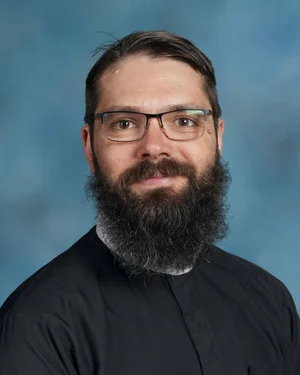
Rev. Christopher R. Gillespie
St. John Ev. Lutheran Church & School - Sherman Center
Random Lake, Wisconsin