

7 October 2026 • Friday of Trinity 18 (observed) • Matthew 13:31–35
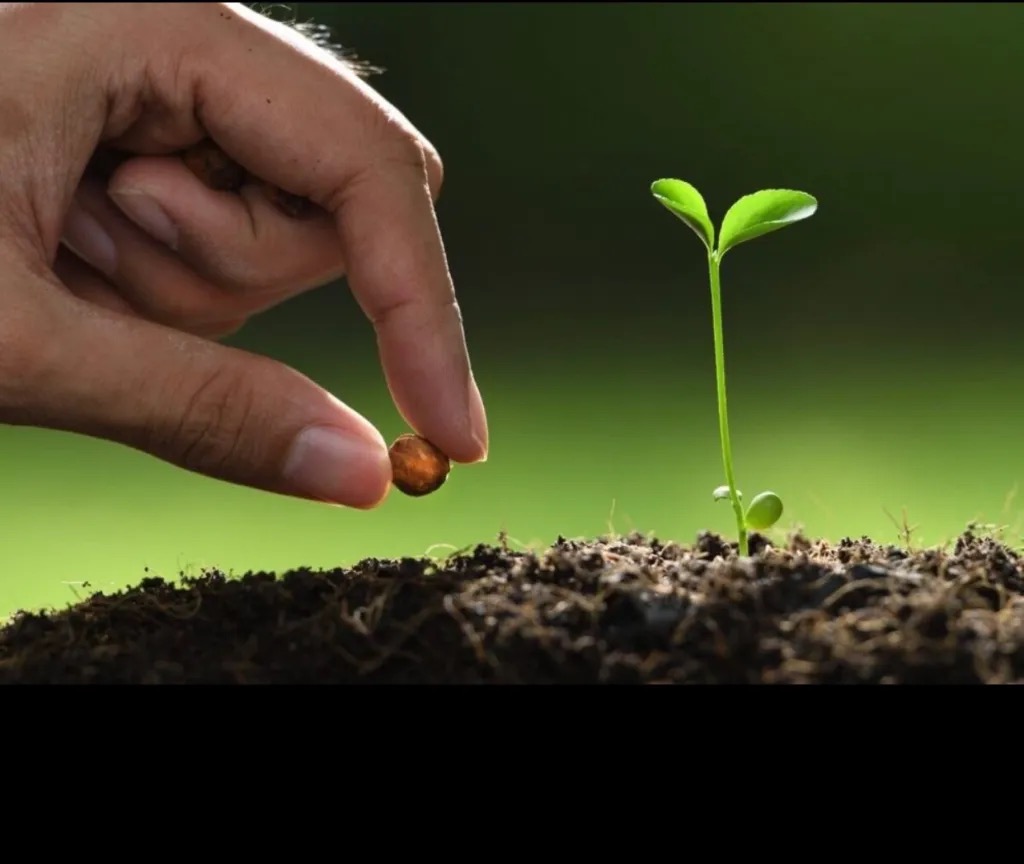
The kingdom of heaven is like a mustard seed, which a man took and sowed in his field (Mt 13:31).
This is the Word of the Lord that came to me, so that you may believe that Jesus is the Christ, the Son of God, and that by believing, you may have life in His + Name. AMEN.
“The least of all the seeds” (Mt 13:32). Look at what Jesus picked. Not an oak. Not the cedars of Lebanon, which every Israelite knew, and every prophet used when he wanted to talk about Christ’s kingdom. He picked a speck of a seed. The kind of thing you lose in the cuff of your pants. And then a woman, and her bread dough, and leaven, which in the Scriptures is hardly ever a compliment, and she “hid” it (Mt 13:33). She hid it in three measures of meal. So we are to learn that the kingdom of heaven is like something you can’t see.
Now, we don’t like that. A kingdom ought to have a show, some pageantry. We hear the word, and we want a crowd, and walls, and a number. So without ever saying it out loud, we grade. We count what’s here tonight, or on Sunday, or in general. And then we set it beside what used to be here. And when the number is small, or smaller, we draw conclusions. And the conclusion is that the Lord isn’t doing much here. Small means absent. Of course, I do that. I look at what He says He is working, and I don’t see it either. So I treat my not seeing as a report from God Himself, from heaven.
Or we could flip it. If the kingdom is a seed, it’s meant to grow, and growing takes work, and somebody has to do it. Time, talents, and treasure. Now the parable is a growth chart with a to-do list stapled to the back. Bigger. Faster. Try harder. Either way, I put myself into the field. Either I’m the judge who decides it isn’t working, or I’m the gardener who has to make it work.
But let’s hear again the Gospel. “A man took, and sowed.” “A woman took, and hid.” Two verbs, and the subject is never you or me. After the planting, nobody in either parable does anything. The seed isn’t managed. The dough isn’t coached along. “Till it was all leavened.” Leavened by whom? Not by the woman. The sentence won’t say, because it doesn’t have to. That’s the passive God uses when He is the one doing it.
And that’s the accusation, and it’s quieter than the ones we’re used to from Jesus. Not, “You did something wicked, or evil, or foolish,” but Jesus sitting here, in effect, saying, “You’ve been grading Me.” We want evidence, and we want it on our schedule. And we’ve turned now to grading ourselves too. A small faith. Just a few minutes of prayer. A word that went in one ear on a weeknight and out the other. And maybe you’ve looked at it and decided, “This can’t be it. Whatever He’s doing, it isn’t doing anything for us, or for me.” The least of all the seeds. The small speck of leaven. And now you’re calling it nothing.
See, Matthew stops to tell us why Jesus talks this way, and he doesn’t use his own words. He borrows from a Psalm: “I will open My mouth in parables; I will utter things kept secret from the foundation of the world” (Mt 13:35; Ps 78:2). Kept secret. We might even say kept small. The hiding wasn’t an accident of how things turned out. The hiding, the insignificance of it, was the plan, from before there was a world even to hide it in.
So hold the seed in your hand for a moment, and then ask the question the parables themselves won’t answer. What is it, that mustard seed? Who is it that the Father took and sowed? Where in all the Scriptures has God hidden Himself best?
Not in a parable, but in a feed trough. In a carpenter’s shop for thirty years, where nobody noticed Him. Born to an insignificant couple from backwoods Galilee, who traveled to Bethlehem on a dark night. In a man He was hidden, a man the neighbors could name by His mother and brothers. “Is this not the carpenter’s son?” (Mt 13:55). That’s what the least looks like when it has a face. “He has no form or comeliness; and when we see Him, there is no beauty that we should desire Him” (Is 53:2). The kingdom of heaven isn’t like something. The kingdom of heaven is Someone, and He is small enough to step on, or to step over.
He says so Himself. “Unless a grain of wheat falls into the ground and dies, it remains alone; but if it dies, it produces much grain” (Jn 12:24). A grain. Just one. Falling and dying. He’s talking about Himself. He took Himself, and He sowed Himself, and the world watched, and then just kept on baking.
Because if you stood there on that Friday, Good Friday, to grade the kingdom of God, I think you and I would both have given it a zero. Spit on. Stripped. Counted with the transgressors. The smallest thing a man can be is a dead corpse, and that’s what He was by evening. John is careful to tell you where they put Him: “In the place where He was crucified there was a garden” (Jn 19:41). A garden. That is a field with a seed in it. A stone rolled over the top of it, and a guard posted, and Saturday: still nothing. Still planted. Nothing you could see. Hid. Hid in the earth, hid under the sentence of death, hid in the dough of the whole world. And working.
Of course, now the part you’ve been waiting for, because Jesus said that mustard seed becomes a tree.
And you know the tree. You’ve seen it every Sunday of your life. Peter said it to the church council: “The God of our fathers raised up Jesus whom you murdered by hanging on a tree” (Acts 5:30). Paul said it to the Galatians: “Cursed is everyone who hangs on a tree” (Gal 3:13), and then, “Christ has redeemed us from the curse of the law, having become a curse for us.” The planting and the tree happened at the same hour. What the world saw that afternoon was a man nailed to beams of wood. What heaven was doing was putting the kingdom into the ground. Everything God has ever said He would do, even from before the foundation of the world, happened in that one place. And it looked like the least significant thing in the world. Just another man dying. A mustard seed. A speck of leaven.
That’s why the kingdom has never been about size. It was never going to be measured by what you can count. It is measured by what hangs there. Of course, it’s the greatest thing in that garden.
And then the birds. “So that the birds of the air come and nest in its branches.” Who nests in a tree? The ones with nowhere else. “Even the sparrow has found a home, and the swallow a nest for herself, where she may lay her young, even Your altars, O LORD of hosts” (Ps 84:3). So under the arms of that tree, nobody asks how big you are. Nobody checks the list of what you were. Jesus said, “And I, if I am lifted up from the earth, will draw all peoples to Myself” (Jn 12:32). And He wasn’t talking about a crowd. “All peoples” means He was talking about you.
Drawing you. Yes, you. The one who maybe has graded Him. The one who has counted and says we’re coming up short. The one who looks at a faith the size of a mustard seed and thinks it’s nothing. It isn’t yours to measure. It never was. He took the least of all the seeds and sowed it for you, and you are the bird, and the branch is His, and you have a place to land.
And here’s how He gets it into you, because He doesn’t leave it there in that garden. He opens His mouth. That’s what Matthew’s Psalm says He does: “I will open My mouth.” And He’s done it here again today. The thing kept secret from the foundation of the world is spoken out loud in this room, by an ordinary voice. Maybe it’s as small as any word you’ve ever heard. But that is leaven. It’s hid in you, in the meal of your whole life, and it works, because He promises, whether you see it or not.
So here are the plain words, that little leaven. Christ died for you. Your sins are forgiven. All of them. In the name of the Father and of the Son and of the Holy Spirit. Amen.
This is the Word of the Lord that came to me, so that you may believe that Jesus is the Christ, the Son of God, and that by believing, you may have life in His + Name. AMEN.
Rev. Christopher R. Gillespie
St. John Ev. Lutheran Church & School — Sherman Center
Random Lake, Wisconsin