
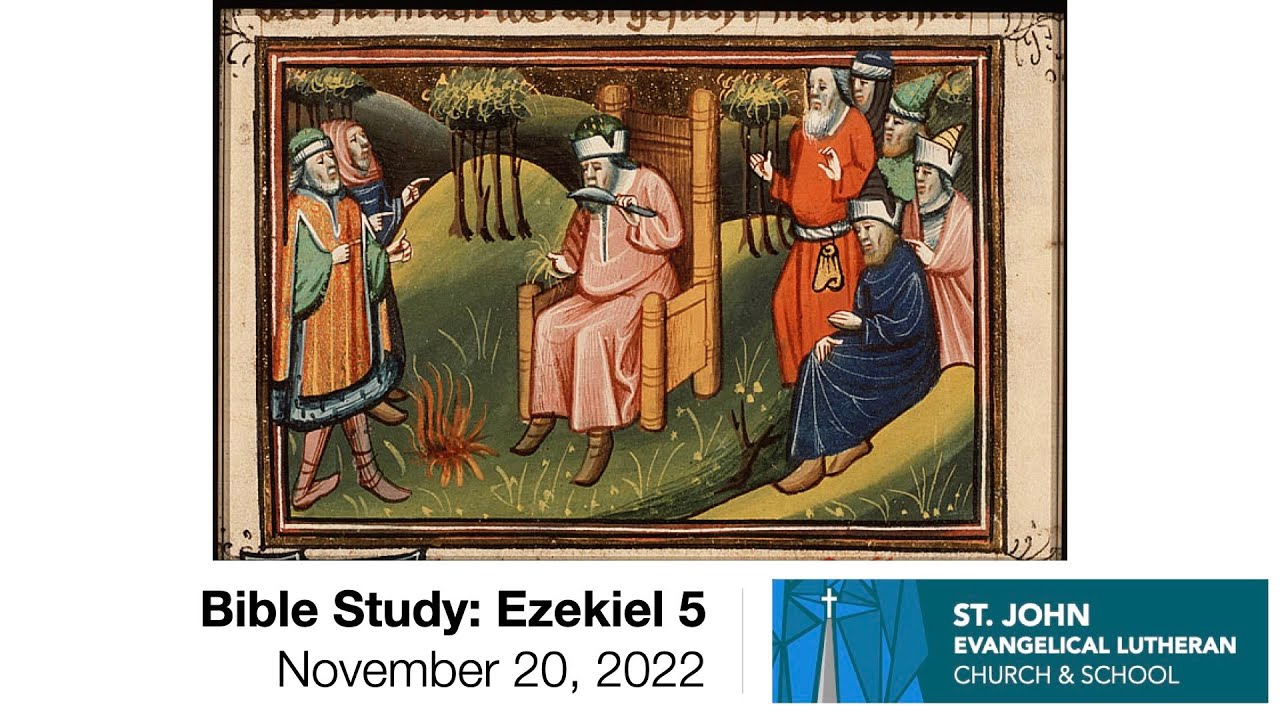
Ezekiel – 5:1-17
5:1 – One is surprised that Ezekiel does not respond negatively to the command to shave his head and face. Priests are forbidden to shave their heads or beards (Lev 21:5; Ezek 44:20). It was also dishonorable culturally for a man to appear beardless (2 Sam 10:4, 1 Chr 19:4). Shaving the head is associated with mourning (Deut 14:10), Ezekiel is assuming the role of the people of the city. 5:2 – The third measure will be interpreted via action prophecy in 5:12. Again, the prediction regards Jerusalem. Fire is a common symbol of destruction, and sometimes God is the punisher. Torching conquered cities is a common practice (e.g., Josh 6:24 and 1:11). The sword is the agent of destruction for the second third. And Yahweh Himself the nal third by the wind. 5:3 – Unlike 5:2, this verse is not interpreted later. The “small number” is consistent with the OT theme of a preserved remnant (see also 6:8, 12; 9:1-6; 12:16; 14:22). Those kept are so by God’s gracious intervention. They correspond to faithful Israel (see Romans 9:11) or the “Israel of God” (Gal 6:16). “We hold that the Church, properly called, is the congregation of saints who truly believe Christ’s Gospel and have the Holy Spirit. We confess that in this life, many hypocrites and wicked people are mixed in with these. They have the fellowship in outward signs, are members of the Church according to this fellowship in outward signs, and so hold o ces in the Church (preach, administer the Sacraments, and bear the title and name of Christians)” (Ap VII/VIII.28). 5:4 – Even some who escape the initial judgment (5:3) experience wrath. Echoes of the curses of Lev 26:36-39 for covenant violation are heard here. While re can be for puri cation (Is 6, Mal 3:1-14), it seems primarily destructive here. 5:5 – This begins a generic judgment oracle, a virtual synopsis of much of the rest of the book, primarily through chapter 24. Now words are spoken concerning the brick with Jerusalem etched on it. Is Jerusalem the geographical center of the world? Instead, it is the theological center of God’s saving activity. It is “Zion,” intimately connected to David and the promised Davidic king (Ps 2:6; 132:10-14). The new birth of God’s kingdom in Baptism begins there with Christ’s death and resurrection (Rom 6:1-4) and the church’s mission (Acts 1:8)….