

Planning Without Anxiety: Why Saving Is Wisdom—And Why You're Still Not in Control
Prudent saving matters. God does not call us to live carelessly or burden others with our refusal to plan. Yet the ant's wisdom and the foolish man's bigger barn teach us something that no budget app can fix: security is not found in numbers. It's found in the God who feeds the birds. This week, we talk about the real freedom that comes when you save wisely and trust deeply.
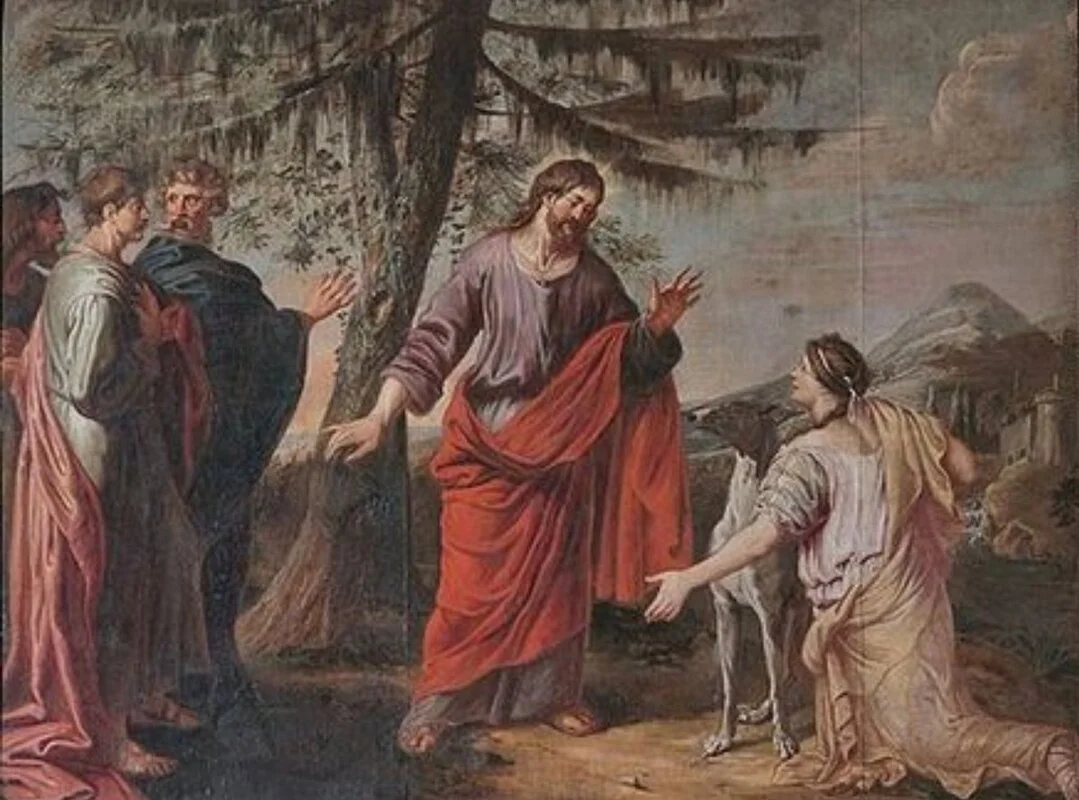
“O woman, great is your faith! Be it done for you!" Reminiscere 2026
So when the Lord seems slow, do not read that as absence. When He seems harsh, do not read that as final rejection. He is doing what He did with Jacob: wrestling you down to the promise. “I will not let you go unless you bless me.” (Genesis 32:26) That is not stubbornness; it is faith taught by the cross.
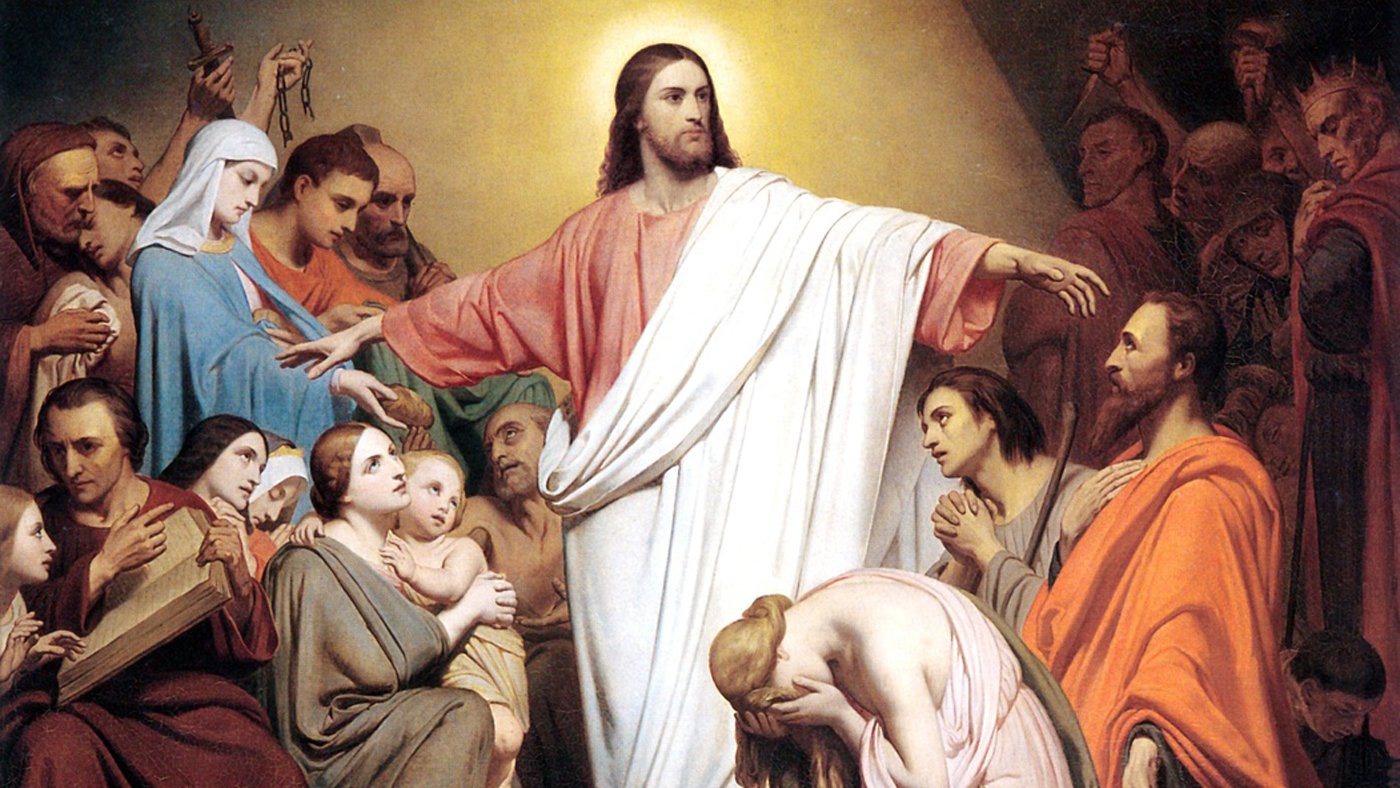
"Signs don’t create faith in a dead heart. Faith comes by hearing!" Ember Wednesday 2026
Jonah went unwillingly; Jesus goes willingly. Jonah preached grudgingly; Jesus preaches as the Word made flesh. Jonah was thrown into the sea because of his own disobedience; Jesus was thrown into death because of ours. Jonah is a sign that exposes how little control we have; Jesus is the sign that gives us what we could never earn: forgiveness, life, salvation.

Save Like an Ant, Rest Like a Child
Saving is simple Christian wisdom, meant to serve love and strengthen households for ordinary burdens. But Jesus warns against turning money into a false refuge and against letting worry rule the heart. Start with a plan: give first, save steadily, and entrust outcomes to God’s fatherly care.
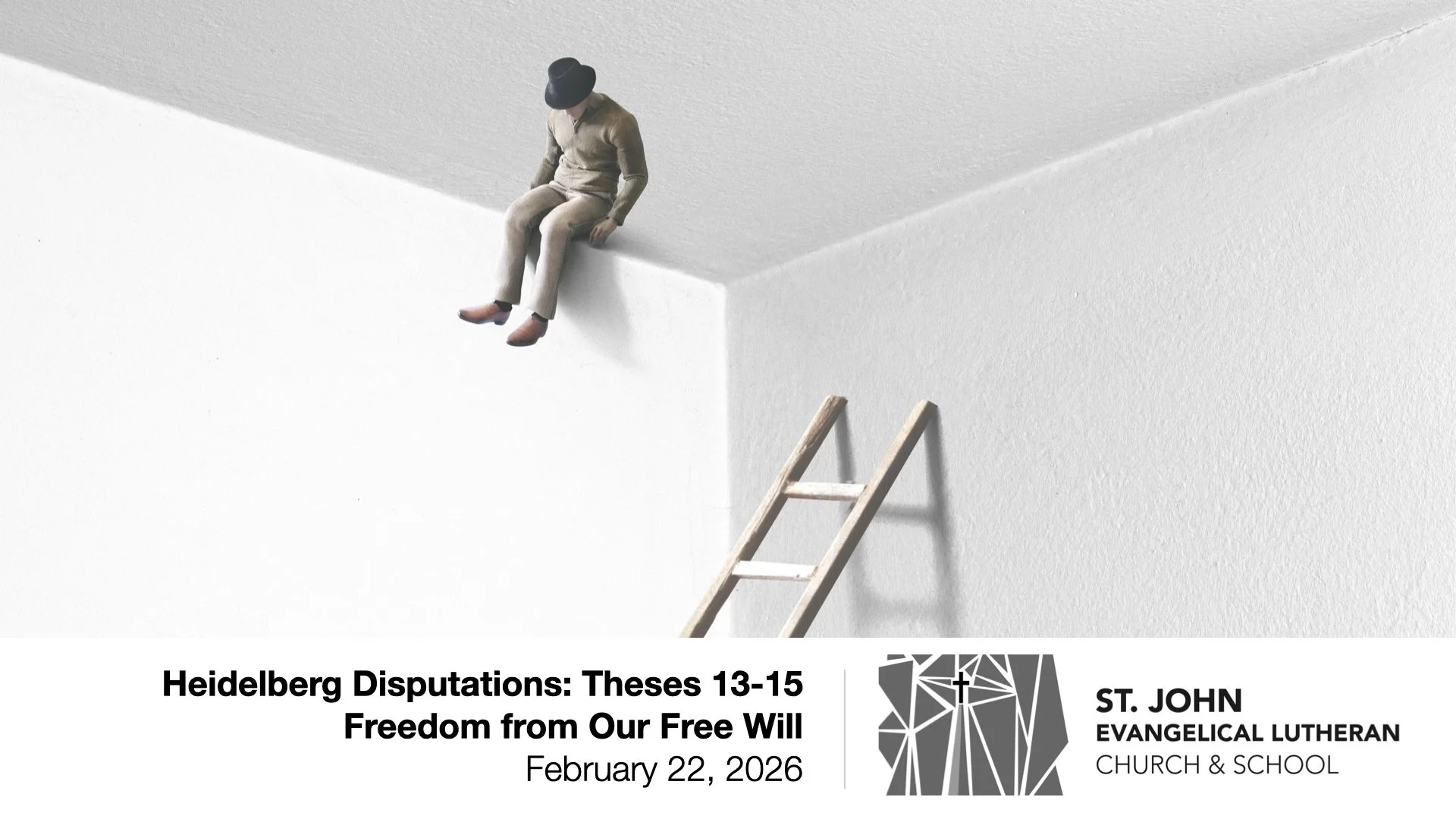
Heidelberg Disputations: Theses 13-15 "Freedom from Our Free Will" — February 22, 2026
Thesis 13: “After the fall, free will exists only as a concept, and as long as it acts in accordance with itself, commits a deadly sin.”
Thesis 14: “After the fall, free will only has the power to passively do good, but it is always able to actively do evil.”
Thesis 15: “Further still, free will could not remain in a state of innocence, much less actively do good, but the will is only able to do good passively.”
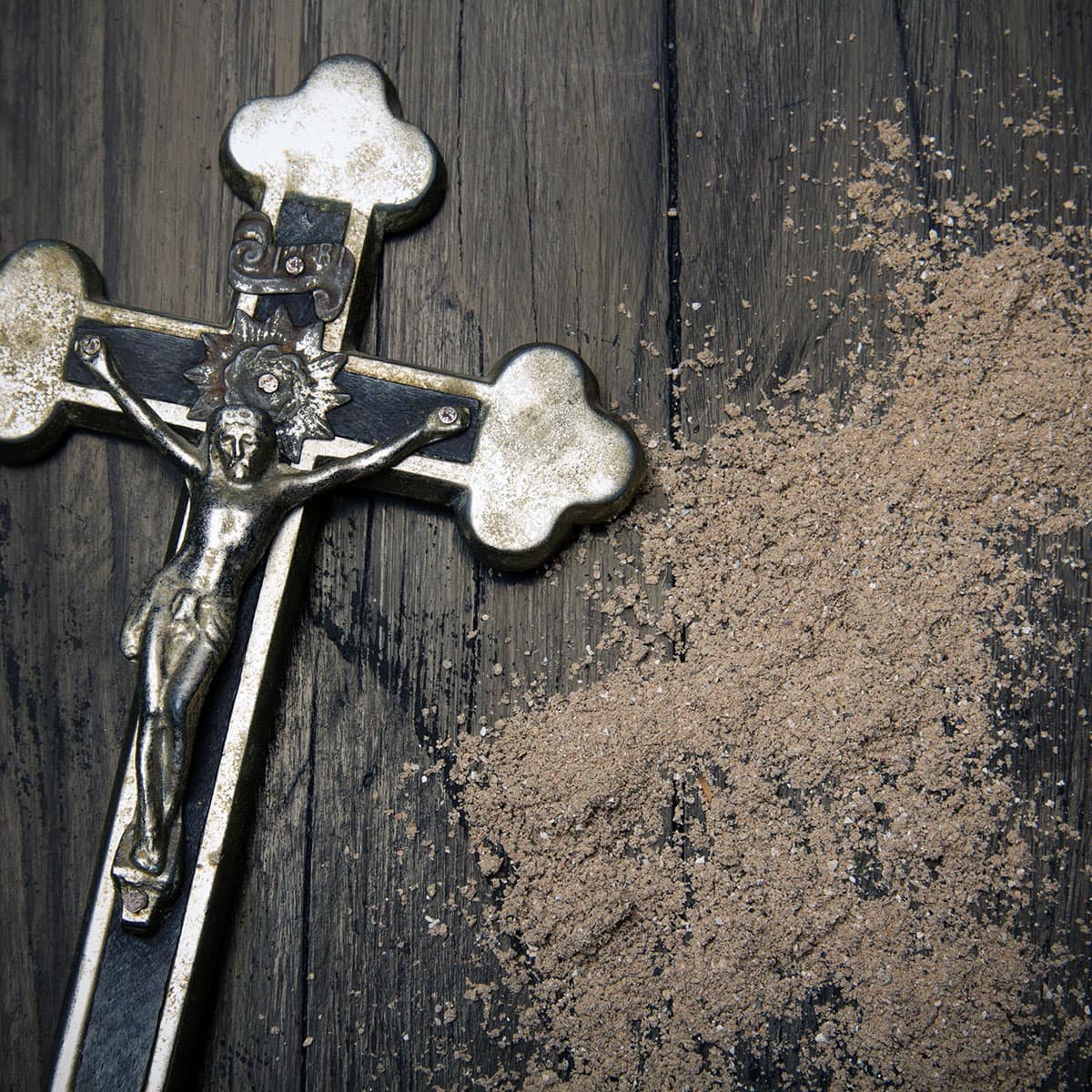
The Trouble With Lent (and Why We Still Need It)
Christian discipline isn’t bad. Not even close. Scripture speaks of fasting, prayer, and self-control. Luther says outward practices can be useful, as noted in the Small Catechism. But useful isn’t the same as saving. When discipline becomes the cure rather than the symptom, we’re already off track. Repentance isn’t a self-improvement project. It’s not climbing up to God rung by rung. It’s being stopped cold by God’s Word. Exposed. And addressed.
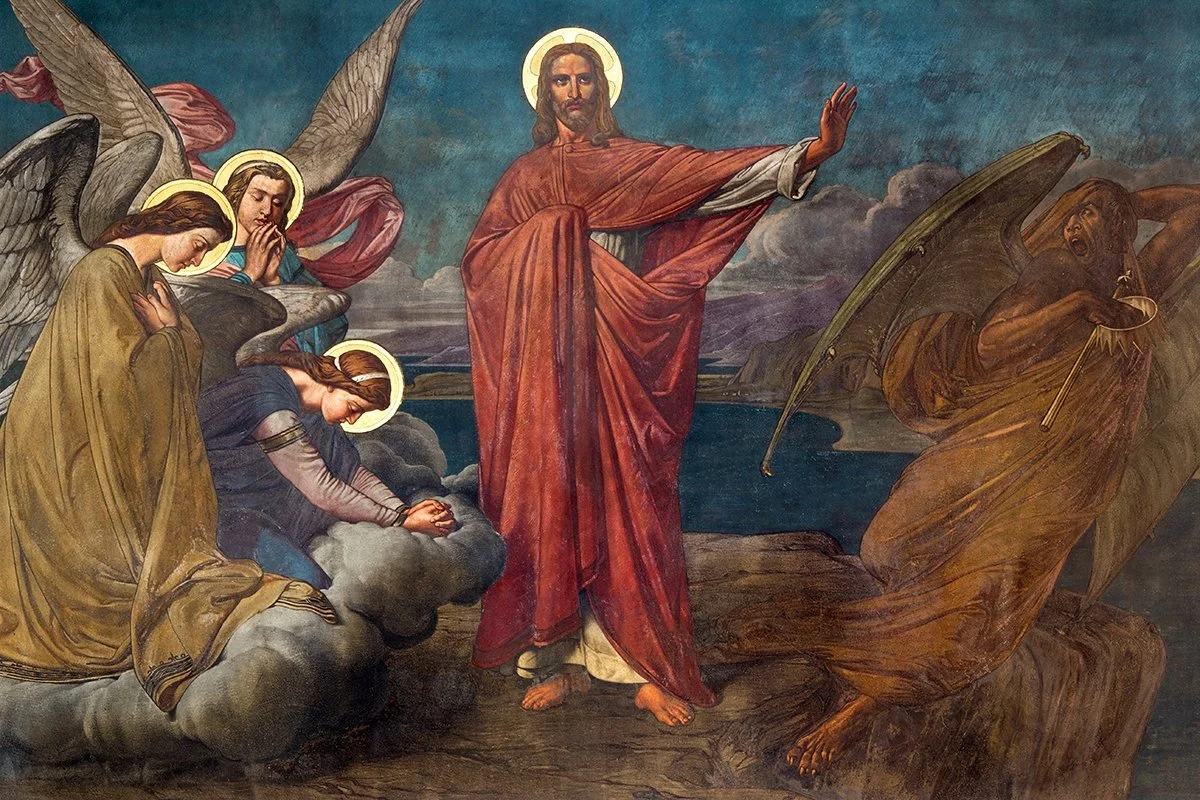
"Your salvation does not hang on your wilderness performance. It hangs on His!" Invocavit 2026
And He goes as the Second Adam. The first Adam was placed in a garden. Surrounded by abundance. No hunger. No thirst. No thorns. Only one prohibition. And he fell. The Second Adam stands in a wasteland. No food. No comfort. Forty days of fasting. And there He stands for you.

Debt and Freedom: Wisdom, Love, and the Weight of Tomorrow
Debt is not automatically sinful, nor is being debt-free a badge of righteousness. Scripture speaks with truth and mercy. Borrowing can serve love and vocation, yet it can also quietly bind us. This week, we consider when debt is wise, when it becomes slavery, and how Christian households can walk in honesty, responsibility, and hope.

"Remember that you are dust. And remember whose dust you are." Ash Wednesday 2026
Ash Wednesday is not merely about dust. It is about dust claimed by God. It is about sinners marked not only with ashes but with the cross. The same forehead that hears, “Remember that you are dust,” was once washed with water and the Word. In Holy Baptism, you were buried with Christ and raised with Him. The ashes do not erase that. They intensify it.
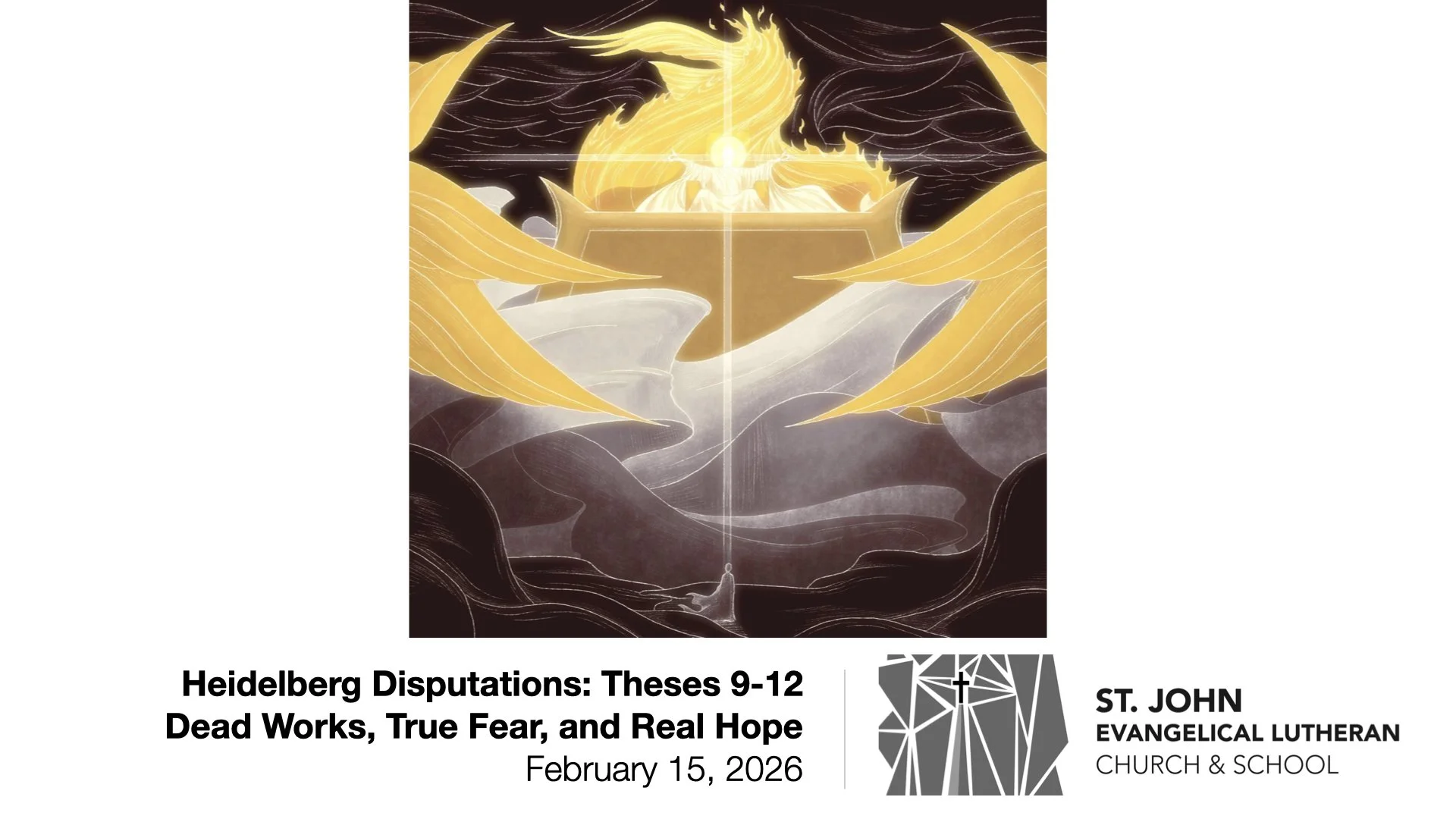
Heidelberg Disputations: Theses 9-12 — Dead Works, True Fear, and Real Hope
Thesis 9: “To say that works without Christ are indeed dead but not mortal sins seems a perilous rejection of the fear of God.”
Thesis 10: “Indeed, it is very difficult to see how a work can be dead and at the same time not a culpable, or mortal sin.”
Thesis 11: “Arrogance cannot be avoided nor can true hope be present, unless the judgment of damnation is feared in every work.”
Thesis 12: “As a consequence, in the sight of God sins are truly venial when human beings fear them as mortal.”

"Mercy is asked. Mercy is given. Sight is restored!" Quinquagesima 2026
The blind man did not analyze mercy; he received it. He cried for it and received it. So also here. At the altar, mercy is distributed in the most concrete way possible. At the altar, sinners who confess, “Have mercy on me,” are given Christ. Sins are forgiven. Faith is strengthened. Eyes are opened again and again. And this changes you.
"If justification depended on the perfection of our speech, none would stand" Wednesday of Sexagesima 2026
If the tree is bad, fruit inspection will not save it. The tree must be made new. Christ does not merely trim branches. He dies. He rises. He gives His Spirit. He creates a new heart.
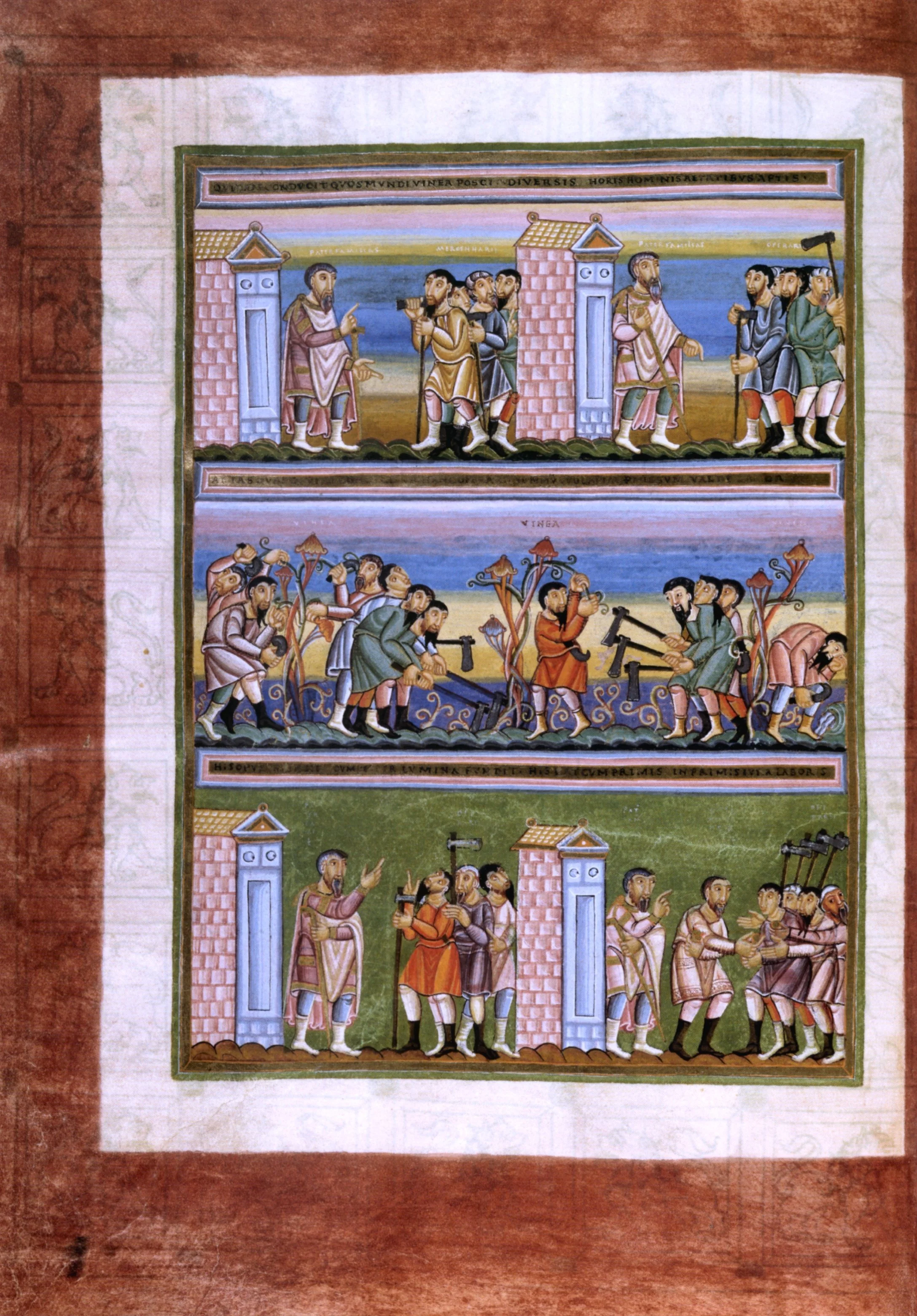
The Vineyard and the Scoreboard in Your Head
The parable of the workers in the vineyard pokes right at our instinct for comparison and grievance. Christ doesn’t train us to negotiate God’s generosity—He teaches us to receive it, and then to live out that same generosity toward our neighbor.
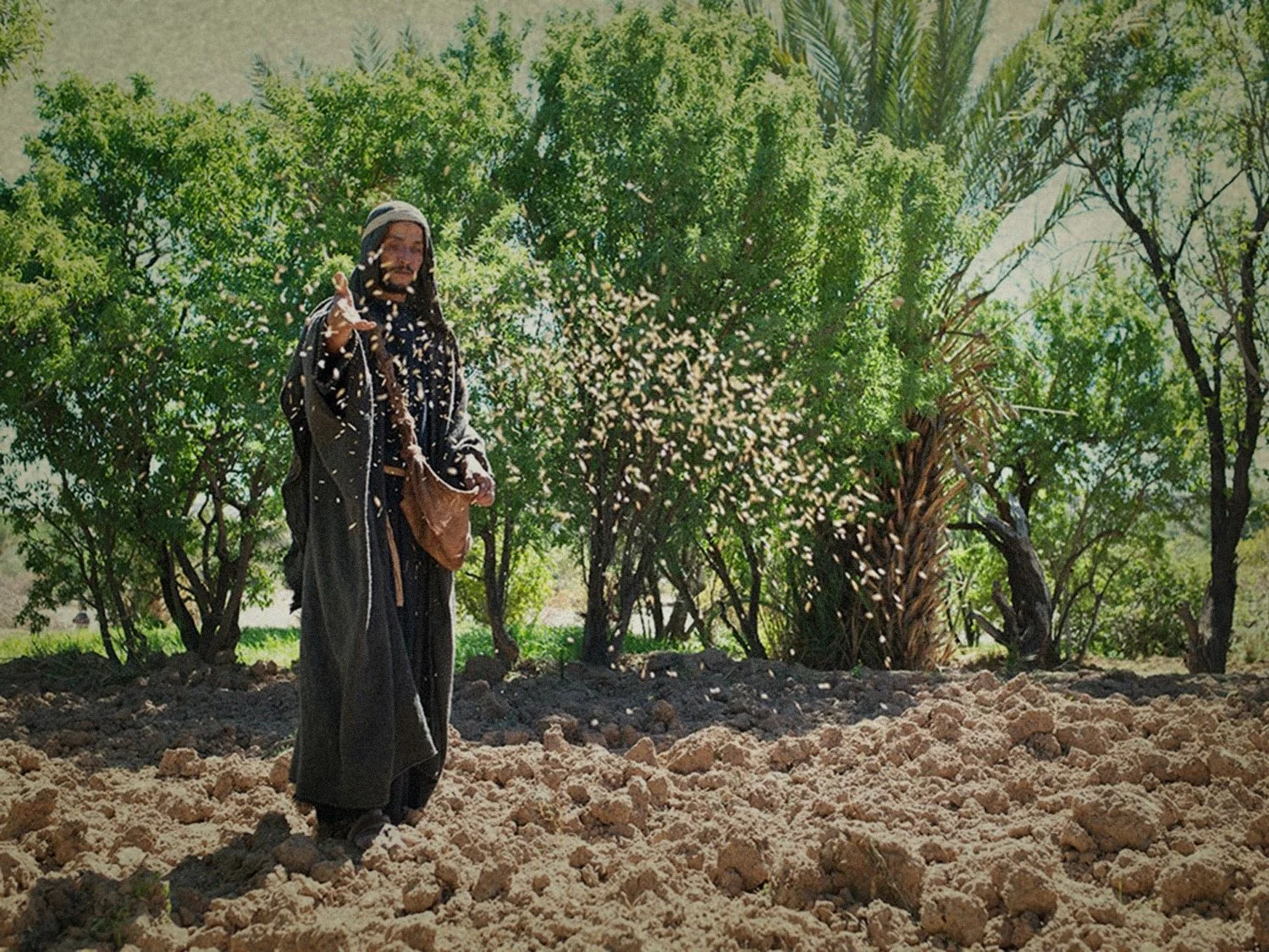
“The Seed and the Soils: Why the Service Is So Word-Heavy” Sexagesima 2026
Now the good soil. Jesus does not define it by natural aptitude, as though some people are born spiritually receptive. He defines it by what happens to the Gospel: “hearing the word, hold it fast” (Luke 8:15). They keep Christ. They keep the Gospel. They do not move on from it. They do not treat it as the starter course before “deeper things.” The deeper thing is always the same: Christ for you. Christ crucified for you. Christ risen for you. Christ preached into you. They hold Him fast when they feel strong and when they feel weak, when life is calm and when it is chaotic. And they bear fruit with patience.
Heidelberg Disputations (1518): Theses 7 & 8 — February 8, 2026
Thesis 7: “The works of the righteous would be mortal sins were they not feared as mortal sins by the righteous themselves out of pious fear of God.”
Thesis 8: “All the more are human works mortal sins when they are done without fear and in unadulterated, evil self-security.”
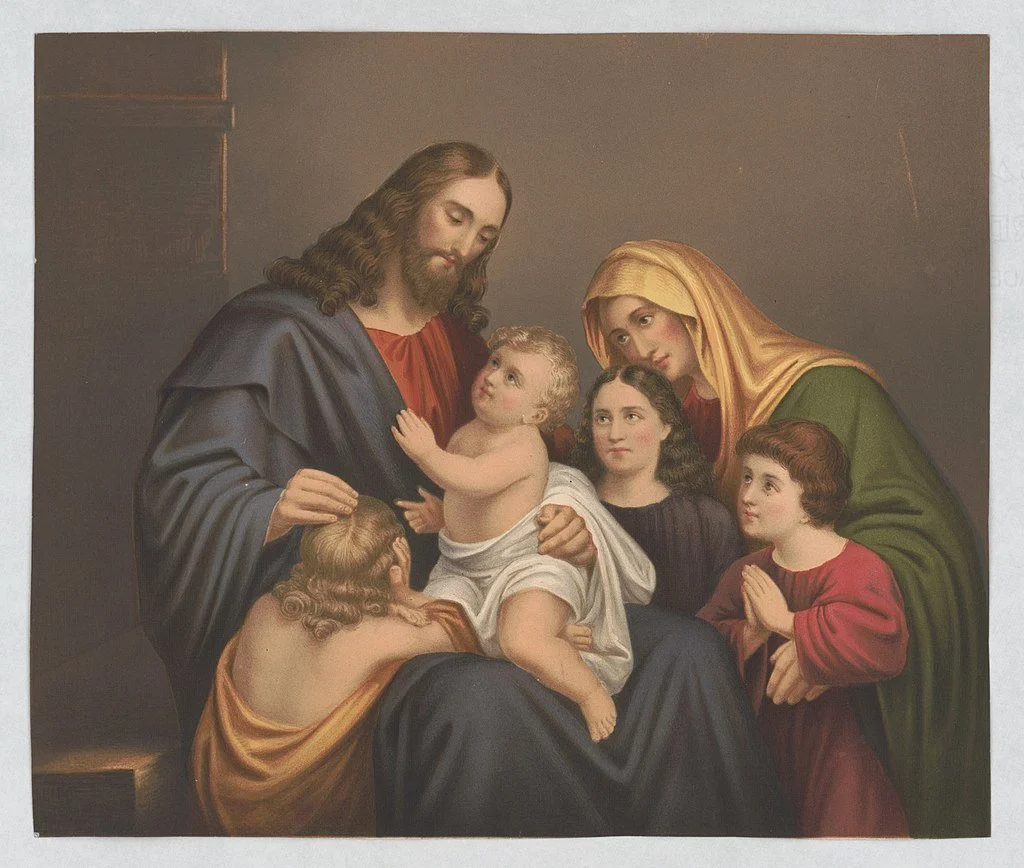
"The same Lord who calls us last also places Himself beneath us." Wednesday of Septuagesima 2026
The greatness of God hides itself here—under weakness, humility, and need. This is not a strategy for influence. This is a theology of the cross. Christ prepares us for this truth by stripping away our illusions. It reminds us that the kingdom of God is not built by human excellence or sustained by spiritual achievement. It is given. Freely. To the unworthy.

The Seventh Commandment in Everyday Life: More Than a Mask and a Gun
“Do not steal” reaches further than obvious crimes. God protects your neighbor not only from robbery, but also from the quiet, respectable ways we can take—through dishonesty, carelessness, or taking advantage. And Christ frees us to live differently: with clean hands, open hearts, and practical love.

"Real renewal is throwing wage-thinking into the fire" Septuageisma 2026
Real renewal will not come by whipping the workers harder. Real renewal will not come with “butts in the pew” or “capital campaigns.” Real renewal is throwing wage-thinking into the fire and letting the whole parish live from gift-thinking. Everything good in this place comes from what Christ hands out. The Church is not built by spiritual overtime. The Church is built by Christ giving himself—again and again—in Word and Sacrament.
Heidelberg Disputations (1518): Theses 5 & 6 — February 1, 2026
Thesis 5: “The works of human beings—we speak of works which appear to be good—are thus not mortal sins as if they were crimes.”
Thesis 6: “The works of God—we speak of those that are done through human beings—are thus not merits as if they were sinless.”
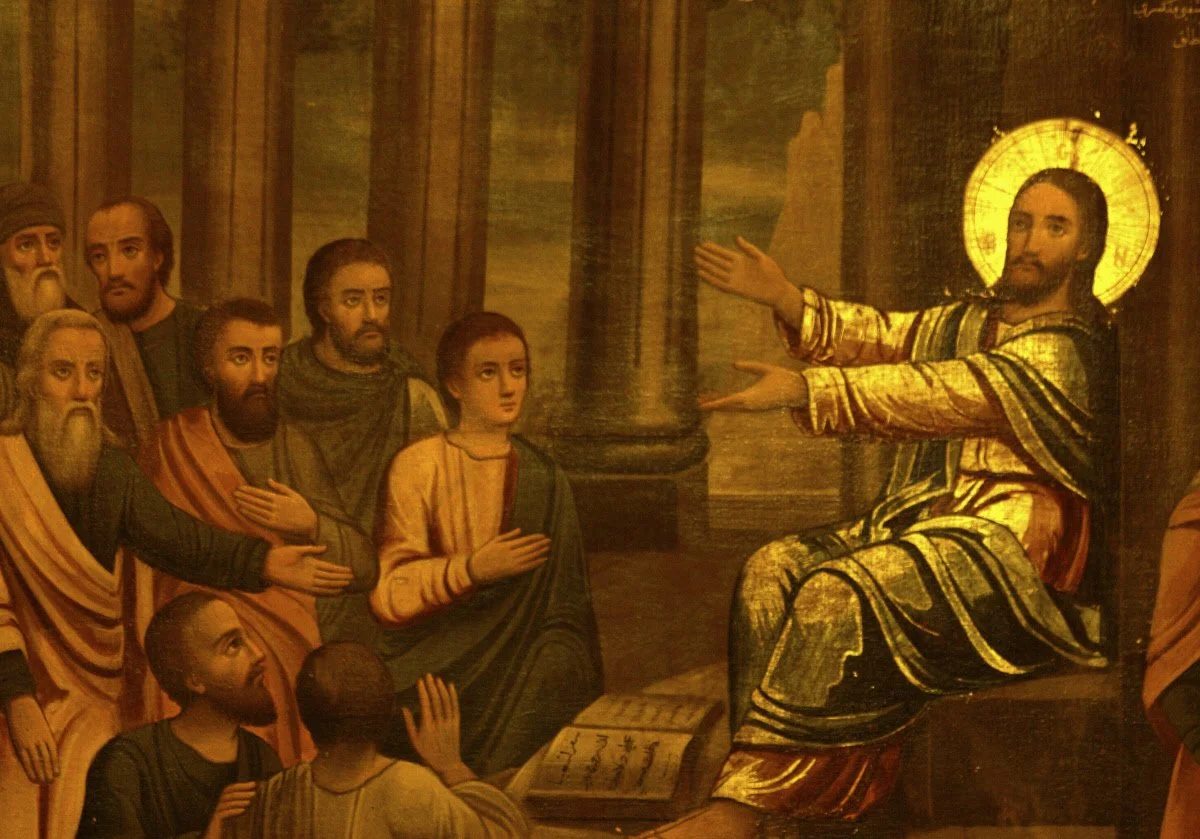
Sermon: "Jesus gives Himself in a way that offends the proud, but comforts sinners."
Nazareth couldn’t handle Jesus—not because He was flashy, but because He was too close: “just the carpenter.” That’s the old sin in us too: we want a manageable God, not a Lord who calls us to repent. Romans 2 cuts through our excuses—“God shows no partiality” (Romans 2:11)—and exposes our habit of judging others to dodge our own guilt. The good news: the righteousness God demands is the righteousness God gives in Christ. Stop treating Jesus like background noise. Receive Him where He actually gives Himself—His Word, forgiveness, and gifts—and live as an adopted heir, not a self-justifying critic.